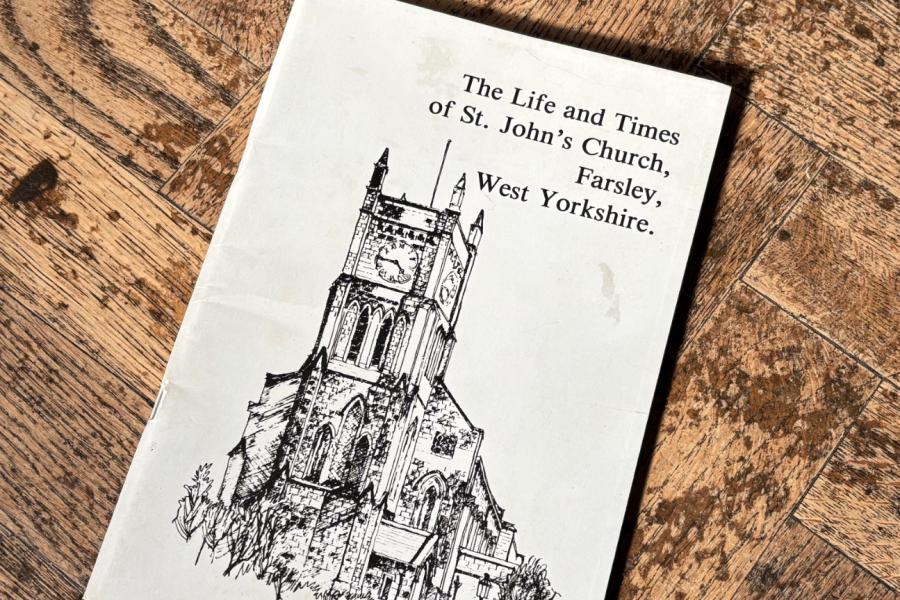
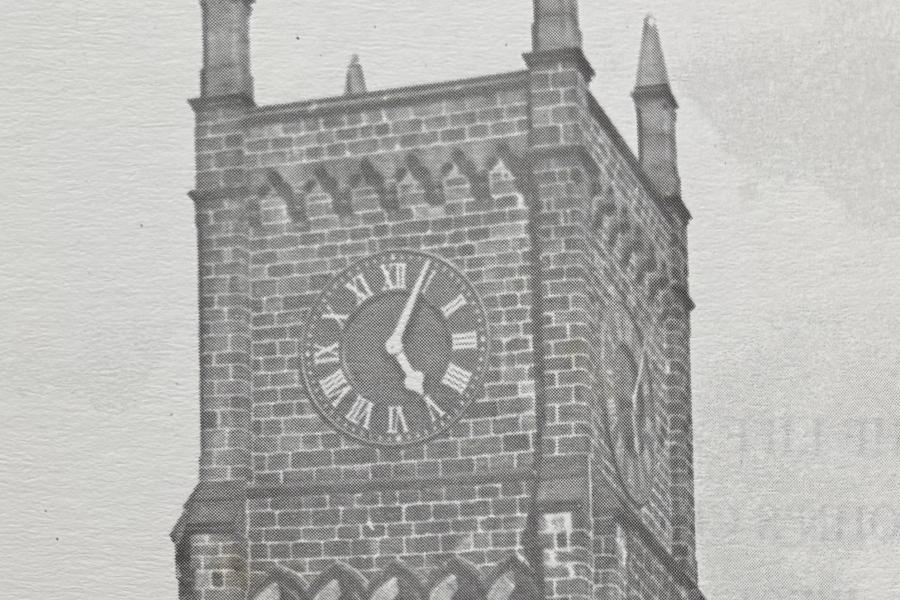
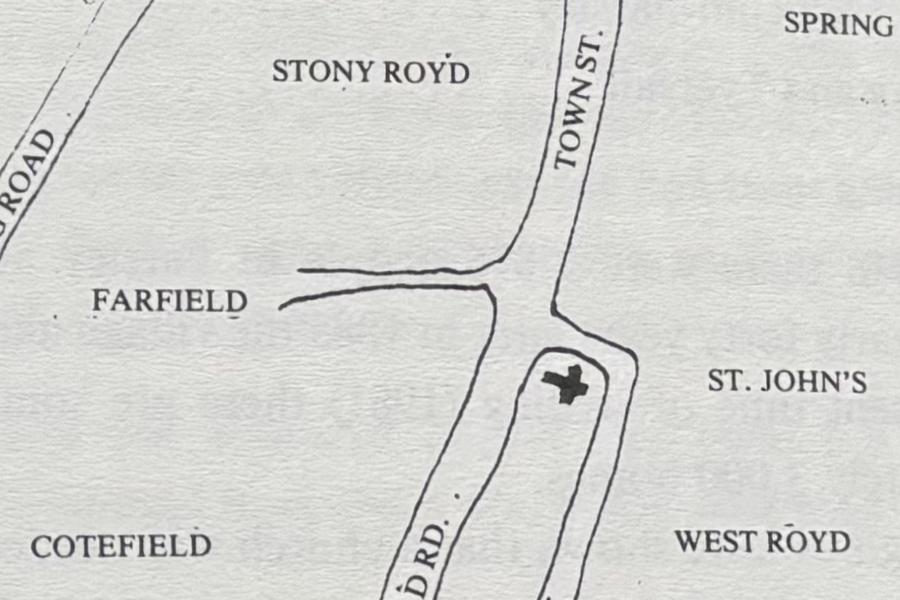
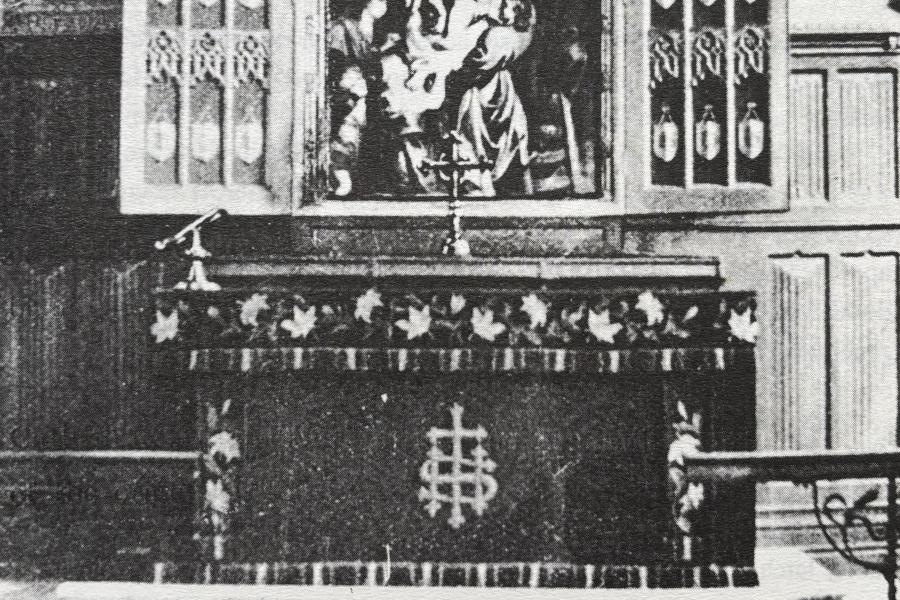
Before moving onto the history of St. John's I would offer a brief description of the village from about 1750.
The village people at this time seemed to be employed mainly in the wool industry. Sir Walter Calverley who owned the land until 1754 when it was purchased by Thomas Thornhill, built fulling mills as his contribution to the development in the area. Weaving was supplementary to many families. Many clothiers of the time were encouraged to buy small plots of land to combine trade with farming. An example of this was Reuben Gaunt (1824-1907) who in his diary makes regular entries with respect to sowing corn and buying livestock by his father and himself.
1755 brought the Enclosure of Common Lands into the district. The export of corn was allowed making tillage worthwhile. Enclosures were favourable for arable purposes but the growing demand for meat gave an impetus to enclosures for pasture-farming. Enclosures were also an advantage to the people who in large numbers squatted on the wastelands eking out an existence tht "bred misery and crime". They were forced into regular employment for capitalist farmers who with their "economic and moral advantage" could transform them in to "sober and industrious citizens".
To improve the woollen spinning, Eli Pearson introduced the spinning jenny to what was often known as "the heart of the West Riding Cottage Industry". This machine that he installed was capable of spinning twenty threads at a time instead of the single one that people worked with. It was said that "the effects which were likely to follow the general use of this wonderful engine were looked forward to with great horror by many who saw in it nothing but ruin".
The first horse-gin was set going in 1791 at Cobblegate by Abraham Grimshaw and Abraham Keighley. Another was set up by Samuel Busfield in the Old Fold. A mention should also be made of the efforts of our own Samuel Marsden who was the first person to bring wool from Australia to this area in 1808.
Evidence indicates that some weaving of cotton took place but eventually these were taken over by the woollen cloth industry. The cloth made was mostly of coarse wool, thick spun and woven in open "set". The spinning jennies, which at the time could have as many as fifty spindles, were having a desire effect of reducing the amount of employment in the district as a whole. Workers could obtain "slubbing copings" (balls of thread) which they drew out of the jennies into warp and weft to weave into cloth on their own hand looms. Some of the houses in Farsley still show where hand looms were kept in the upper storey or in the roof space.
Cape Mill played its part in the life of Farsley and was associated with the name of Hainsworth, later Gaunt and at present known as Four Seasons. The mill was built by Pollard of Horsforth and was driven by a water-wheel.
Abimelech Hainsworth commenced his business career at Cape Mill, first as a tenant and then in 1813, he and his brother Joseph became the owners. Abimelech – known as "Old Bim" – was said to be "in his time a tower of strength to Farsley". Old Bim died in 1836 but his sons Daniel and Peter continued making army cloth for which they gained a fine reputation. Cape Mill was eventually taken over by Reuben Gaunt.
Sunnybank Mills was built between 1830 and 1836 and as work was needed no opposition was found against the "new machinery". There were a number of other mills built – Nether Cape, Black Dyke Mill and Springfield Mill built by R. Gaunt and Sons who were mainly engaged in cloth manufacture and some worsted yarn for the Bradford market. Providence Mill was built by the Slater family.
Even with these mills there were bad times, when the working classes were often at their "wits end" to get sufficient porridge and bread, which in the majority of cases, was the staple diet. Oatmeal and flour were to become expensive at 4 shillings per peck (20lbs) and 3/2 per stone respectively. Wages were in the region of 2d. to 2½d. per day and the weavers had to pay for the wear and tear of the looms that they used, out of it.
In fact when Reuben Gaunt recorded in his diary in 1843 "the poor are very numerous in Farsley" it was not an underestimation on his part. The poor were numerous throughout the country.
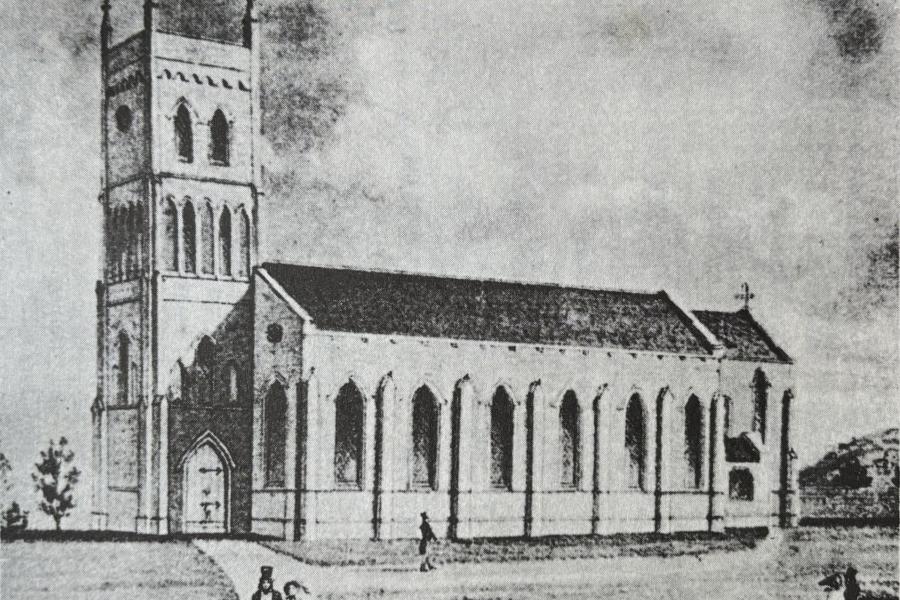
Due to the state of the area then, Samuel Redhead certainly had a difficult "cross to bear" when the suggestion of a church be built in Farsley. Where was the money to come from? In the following history of the church we can see just how the Vicar of Calverley eventually made the Church possible.