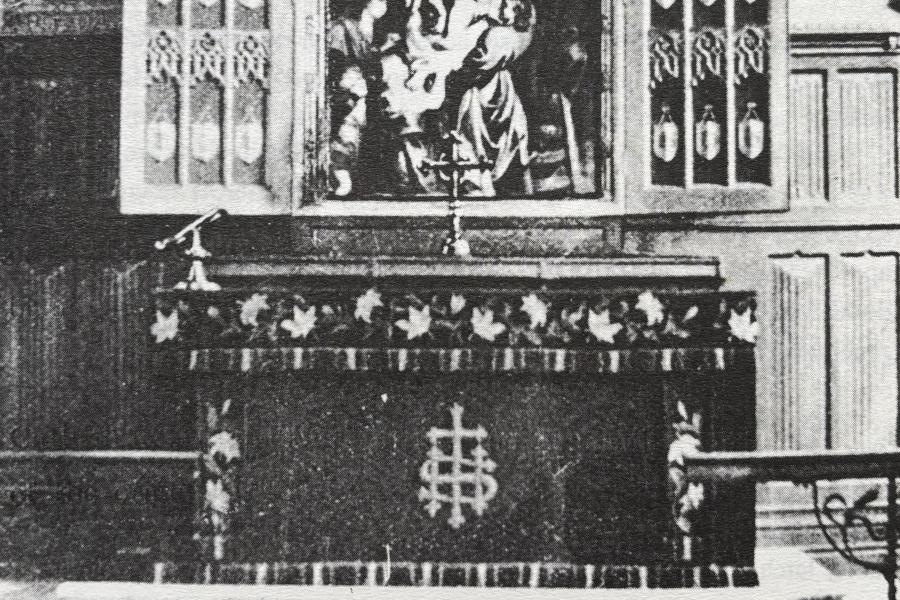
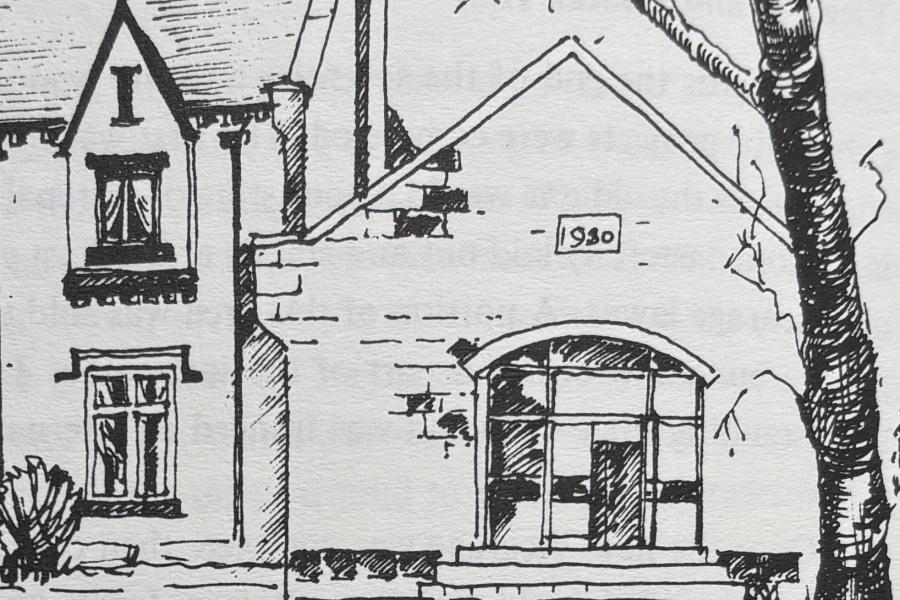
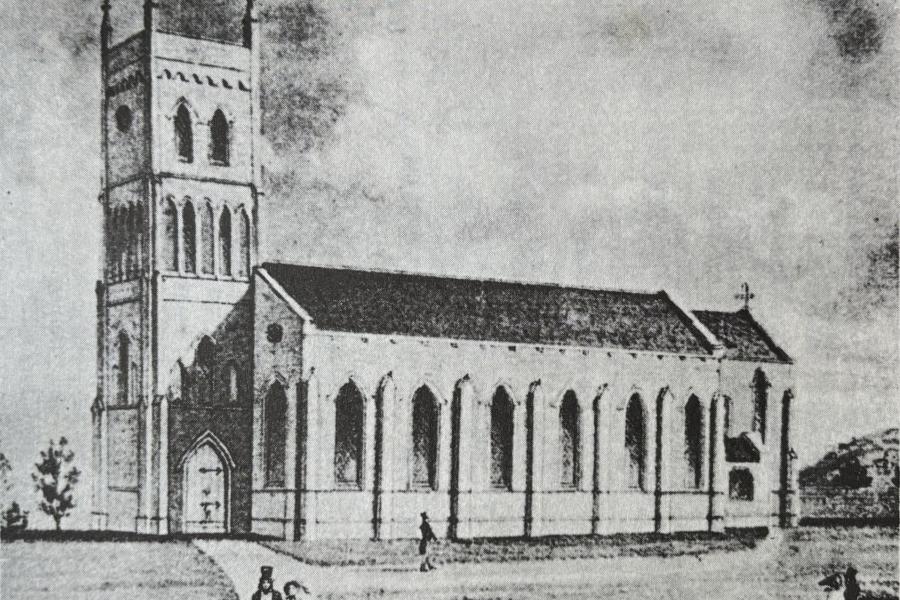
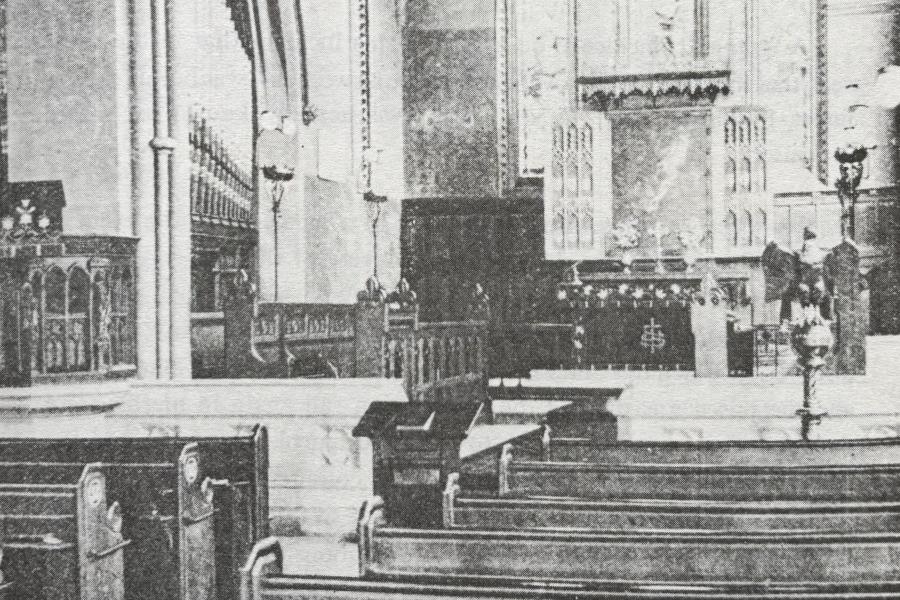
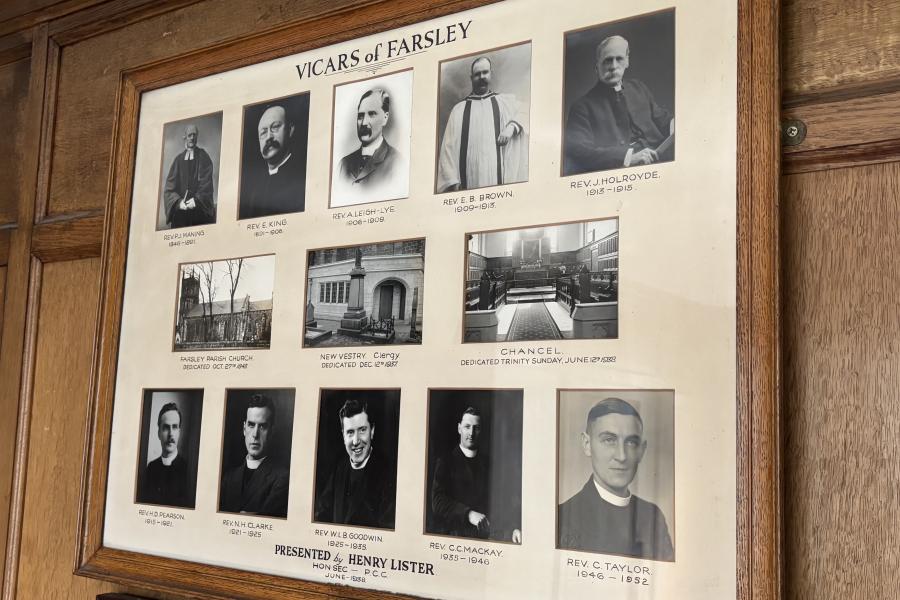
The majority of the church improvements, especially internally, were carried out prior to the 20th century and the church as it stands now, has had very little done to change the image. Decorations are continual but structural work is only maintenance. Additions to the church as we shall see are in the enlarging of the Clergy Vestry and the building of the Choir Vestry.
Pulpit
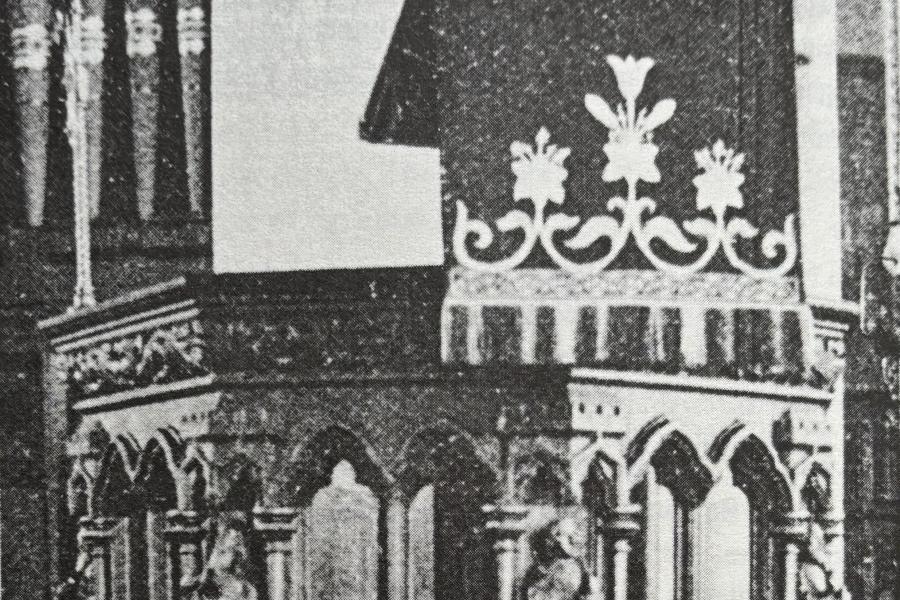
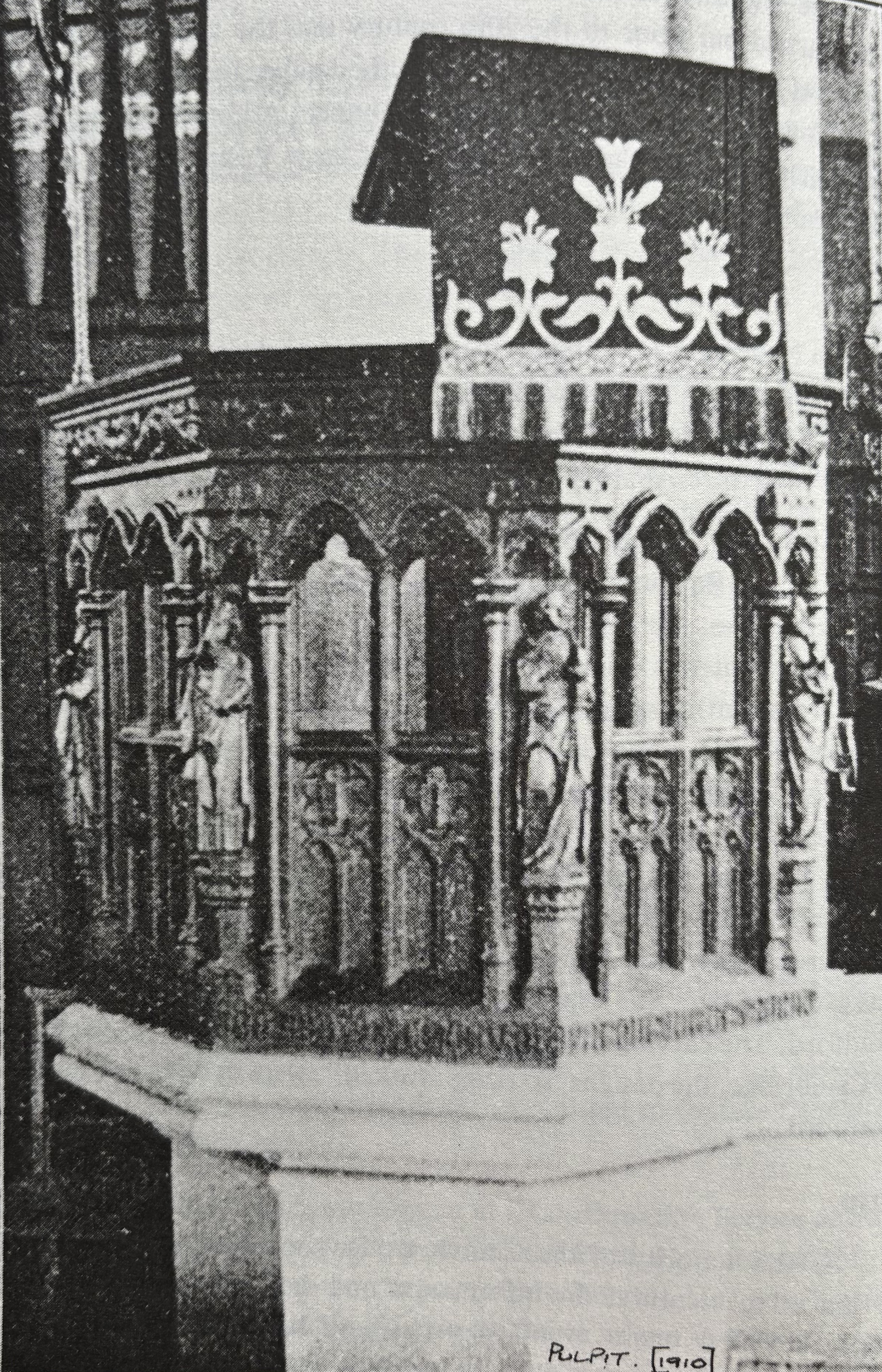
On November 11th 1900 a special service of dedication was held for the installation of the new pulpit (the present one). The pulpit was erected in memory of the late vicar Parsons J. Maning by his daughter who lived in Shrewsbury at the time. Around the base is the inscription -
"To the Glory of God and in memory of Parsons James Maning, Vicar 1845-1891"
The pulpit was originally of a slightly fumed oak (lighter in colour than at present) tastefully carved and polished. In style it harmonises with the Church being Early English. Each of the principle angles contains a pedestal moulded base and carved capital carrying a sculptured figure standing beneath a trefoil-headed niche. The figures are of Moses, Isaiah, St. John and St. Peter, with the most prominent naturally being St. John the Evangelist; the patron saint of the Church. The whole structure is crowned with a richly carved cornice and the basic carving was executed by a Mr. Clayton of Leeds for Messrs. Taylor and Sons of Bradford. The carving of the statuettes was the work of Rattee and Kett of Cambridge, the designs 'so richly worked', were by Messrs. Healey of Bradford.
1910
As the majority of the Church Reviews are missing for the early period of the century, the information and details available are fairly brief. The first major event seems to have been the 'British Empire bazaar' held on October 6th, 7th and 8th, 1910 in the Church School. An excellent souvenir booklet was produced containing a brief history of the church and a short memoir to Rev. Sam. Marsden. The main reason for the bazaar was to raise funds for the renovation of the Vicarage and Church. The bazaar was opened by Mr. J.J. Oddy on the Thursday at 3.00 p.m. on the second day it was opened by Mr. W. Bottomley of Radley and the final day was opened by a number of girls and boys. A wide variety of stalls and games were held. Each stall mentioned in the booklet had a small verse written for it, I like the one written for the Children's Stall:
"We've dolls blue-eyed with curls of flax
Brown-eyed with raven locks,
We've dolls in China, dolls in wax,
And dolls in shoes and socks,
We've dolls with raiment like a sack,
Some dolls in charming frock,
We've dolls of wood which never crack,
These stand no end of knocks".
Each evening there were musical intervals with performances by the "Musical Gondoliers" and also by "The Men's Service Orchestra Band", the conductor being Mr. H. Swaine. Just how much was raised I am not sure but at least £600 was needed to carry out the main works on the Vicarage.
It was about 1910 that Mr. Jesse Stephenson took over as Vicar's Warden from Mr. J.L. Hood and remained in this honorary position until the year of his death in 1944. Being a local businessman he was, as we shall see, to donate quite a lot of money towards various projects carried out. It must be remembered that many people of the area gave to the Church in many ways (see "Gifts made to the Church").
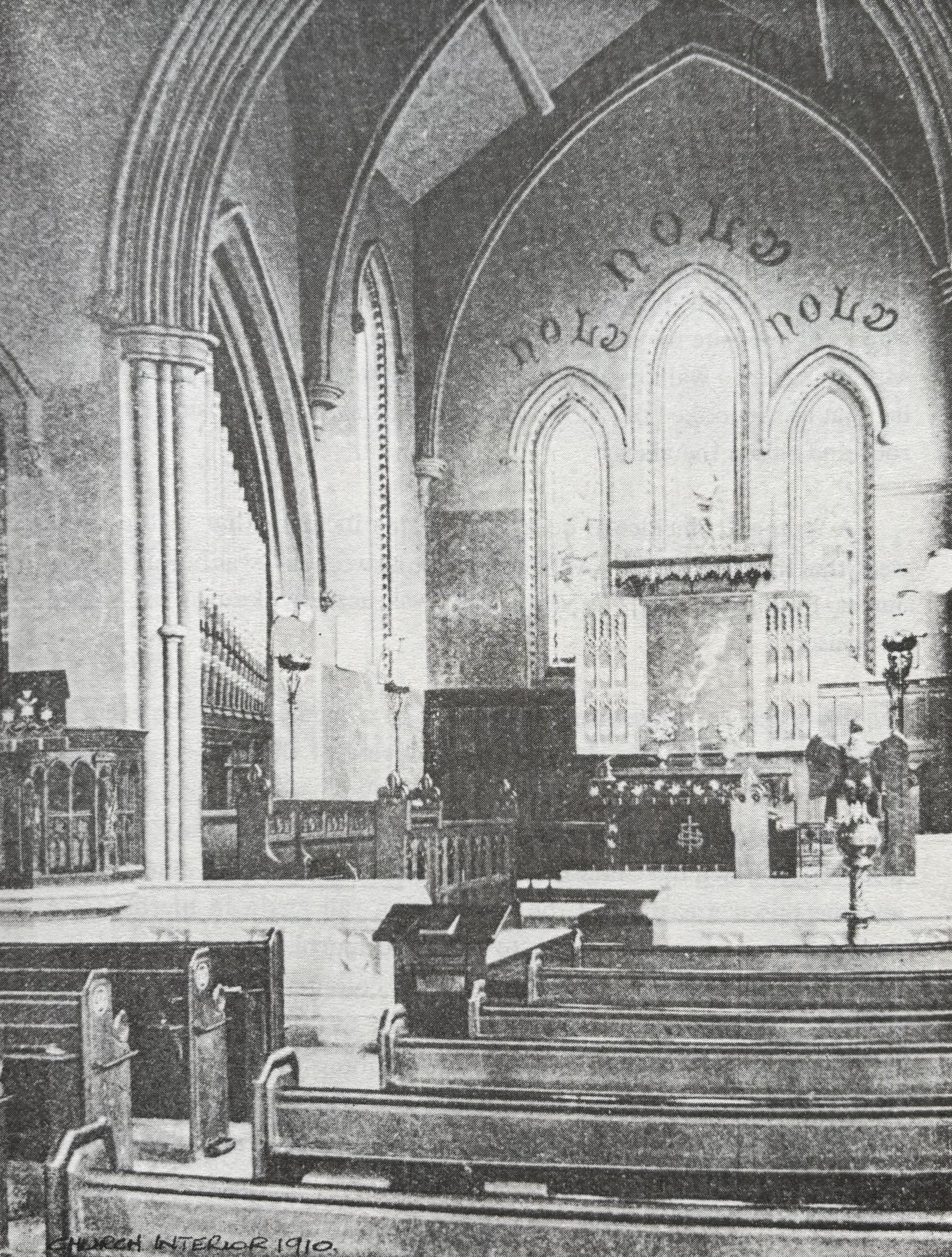
In 1912 a parishioner offered £10 on the condition that £25 be raised towards the cost of installation of electricity into the Church. During 1913 estimates were invited and the work was carried out by the Yorkshire Electric Power Company at a cost of £26.10s. To offset cost, Springhead Ironworks, Bagley Lane, Farsley, bought the gas standards that had been used to light the church. Even at this early date electricity was costing 5d. per unit (2p.) but if you were to use up to 1000 units there was a reducing rate down to 1½d and all units over the thousand were at 1d. It would seem that Electrical Distribution of Yorkshire Ltd., encouraged consumers to use plenty of electricity.
A special service was held for the re-opening of the Church and it was interesting to note the words of the vicar in the Church Magazine "The advantages are apparent to all who come to share in God's worship and we feel at home in so attractive and well-lit building".
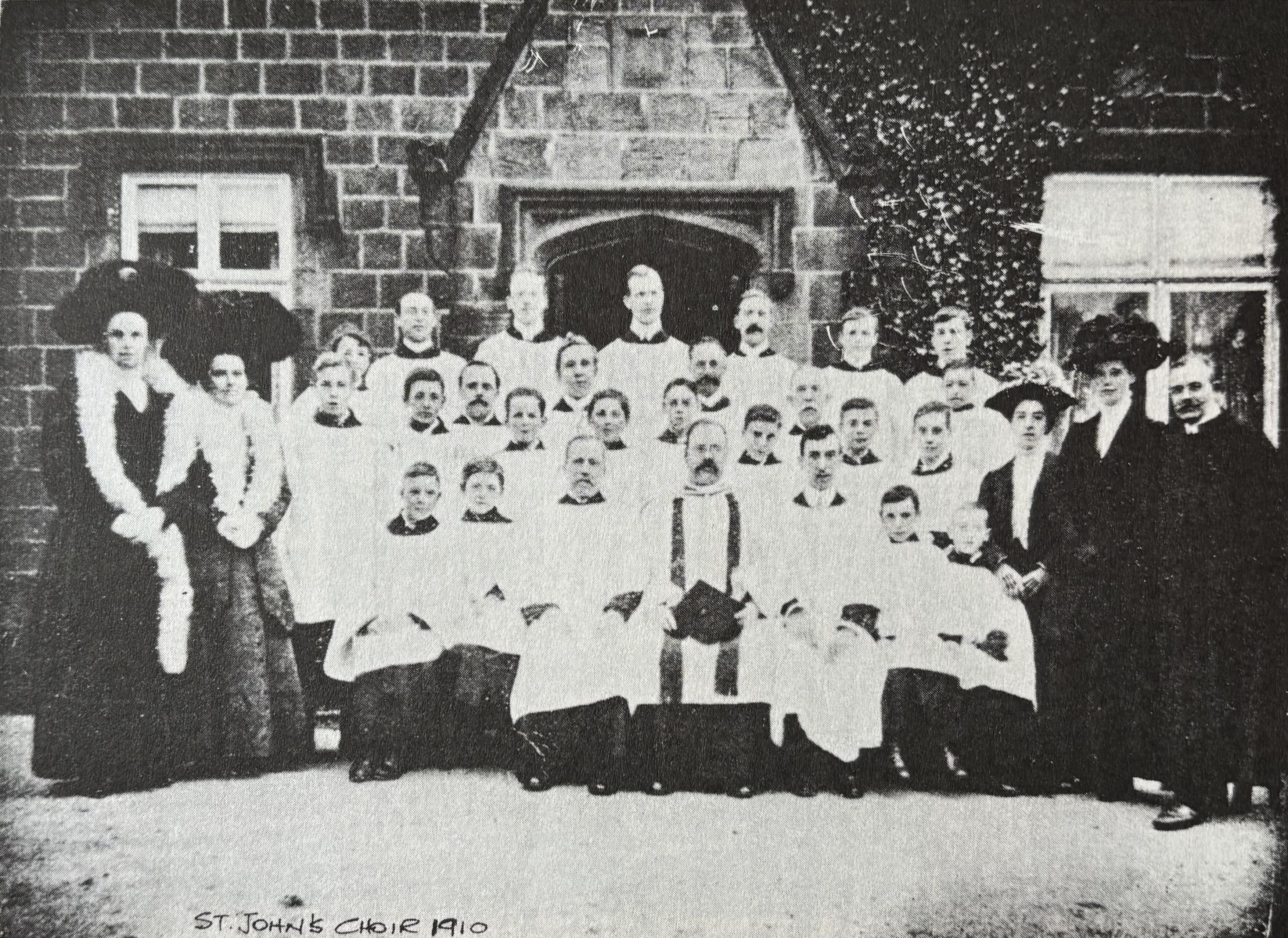
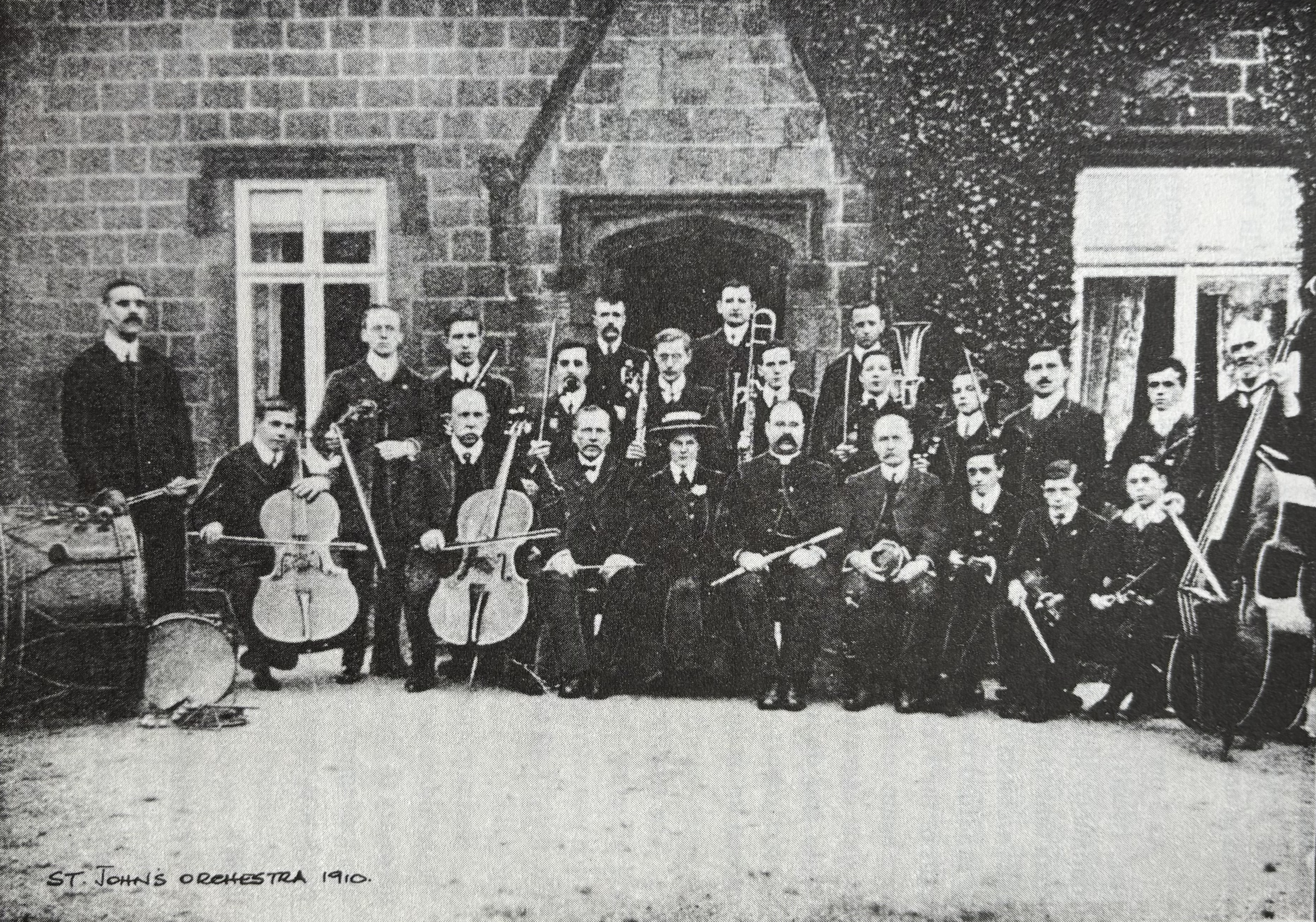
As I previously mentioned information is rather short during the first twenty years of this century. With ecclesiastical buildings continuous upkeep is necessary to maintain them in good condition. From time to time fabric reports are carried out by local consultants such as an architect or structural engineer. In 1922, as in 1894, Messrs. Healey of Bradford carried out another searching inspection, especially on the walls of the West end of the North Aisle. It was found that certain areas were again suffering from movement which was perhaps due to the "late drought aggravated by the condition of the pointing". Pointing of the cracks and decoration was carried out and it was not until 1930 that another report was made in which it pointed out that the cracks had opened up again showing that further settlement had taken place.
The architects concluded that even the problems in the nineties were still affecting this West wall. It was also indicated at the time that the porch was moving away from the main building again due to settlement. The porch had to be taken down and rebuilt on larger footings.
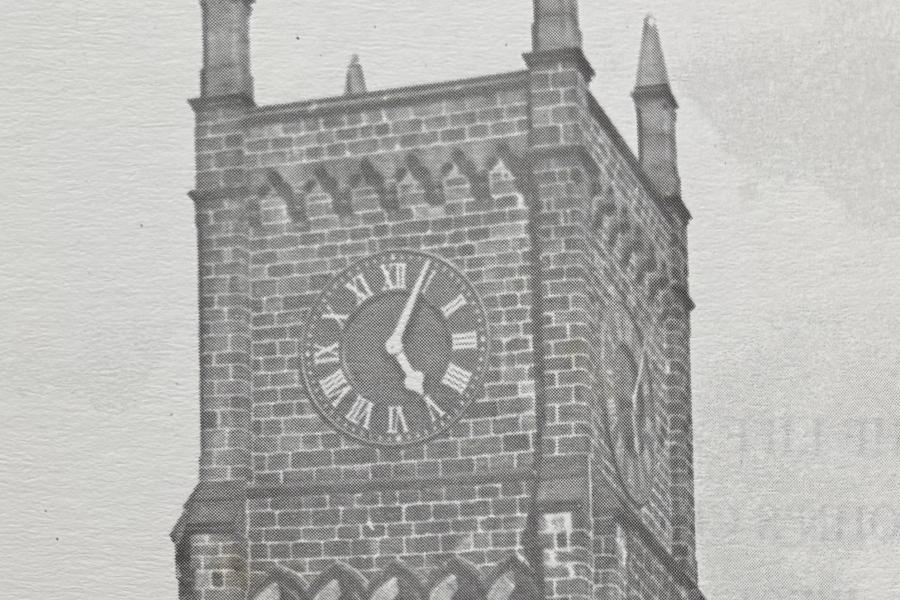
Recommendations were also made with respect of the tower in that "it should be pointed in Portland Cement from top to bottom". It was necessary to underpin the foundations of the West wall to avoid any further movement. The cost of all work undertaken was £345. In 1936 the porch was rebuilt at a cost of £150.
1930's
Turning for while from church building to two celebrations that took place in the latter half of the 1930's. The first being the Silver Jubilee Celebrations on Monday, 6th May 1936. A procession commenced at 2.00 p.m. at the Church School turning into Old Road, down New Street and Town Street proceeding to the Council Offices where singing took place. Later in the day sports were held at Hainsworth Playing Field where the local scouts gave a gymnastic display ably assisted by the Back Lane School Club. The Springfield and Town Mills Boy Scout Band provided the music for open air dancing. At about 9.00 p.m. the band led a procession to the Recreation Ground to round off an enjoyable evening with a firework display around the bonfire.
In December 1935, the Church organised a "Dutch Fair" held over three days. The opening on the first day was carried out by the Mayor of Pudsey, Counc. J.B. Ward, J.P. with the second day being commenced by Ald. S. Myers. The final day was opened by the children with their "Peter Pan's Party". On each day, after the bazaar, evening entertainment was offered in a variety of ways including concert items, glees etc.
Clergy & Vestry
The second event worthy of a mention was the celebrations to commemorate the coronation of George VI and Queen Elizabeth. This was a twofold commemoration with the enlarging of the Clergy Vestry to its present size. The interior was well finished with natural oak panelling. It is recorded that the cost was £535 and was met by the generosity of Mr. & Mrs. Jesse Stephenson.
On the 12th May, 1937 the coronation celebrations were held and were similar to those of the Silver Jubilee. The sports were organised by the Farsley Branch of the British Legion. There were three events for Scouts and Girl Guides - Scout's Mile, Tug-of-War and the Girl Guides' Obstacle Race. A torchlight procession headed by the band proceeded to the Calverley Lane Recreation Ground for a firework display. In addition there were commemoration presents presented to Farsley district school children by the Mayor of Pudsey, Ald. Simeon Myers, J.P. Competitions were held for the "Best Dressed Street" and the "Best Decorated Shop". A member of the congregation, Mr. J.H. Howden, offered to deposit ten shillings in the Post Office Savings Bank for the first child of Farsley Parents born on Coronation Day or soon after.
1940's
Towards the close of 1945 the village saw the re-opening of the Men's Institute. The October Church Review said "the 'Stute is the best place in Farsley for your lad on a spare evening. They can find healthy recreation, learn to share, and have a good evening under supervision without the inevitable gambling and drinking". It continued to say "The rule of smoking is simple" - "If you smoke at home, smoke here". Although smoking was not encouraged, the Stewards were not in a position to stop boys smoking in fact cigarettes were provided for the smokers.
Throughout the years of the Men's Institute they were seen to help in many ways.
Choir Vestry
One of the major projects in the life of St. John's was the provision of the Choir Vestry. It had been considered for a number of years but the "stumbling block" had been the building restrictions enforced by the Government after the last war. Building materials were in short supply. Eventually after a number of requests to the Ministry of Works a licence was granted. The Choir up to this period in time had had "to make do". With the proposed vestry it meant that the procession would be from the West end of the church and from behind the congregation.
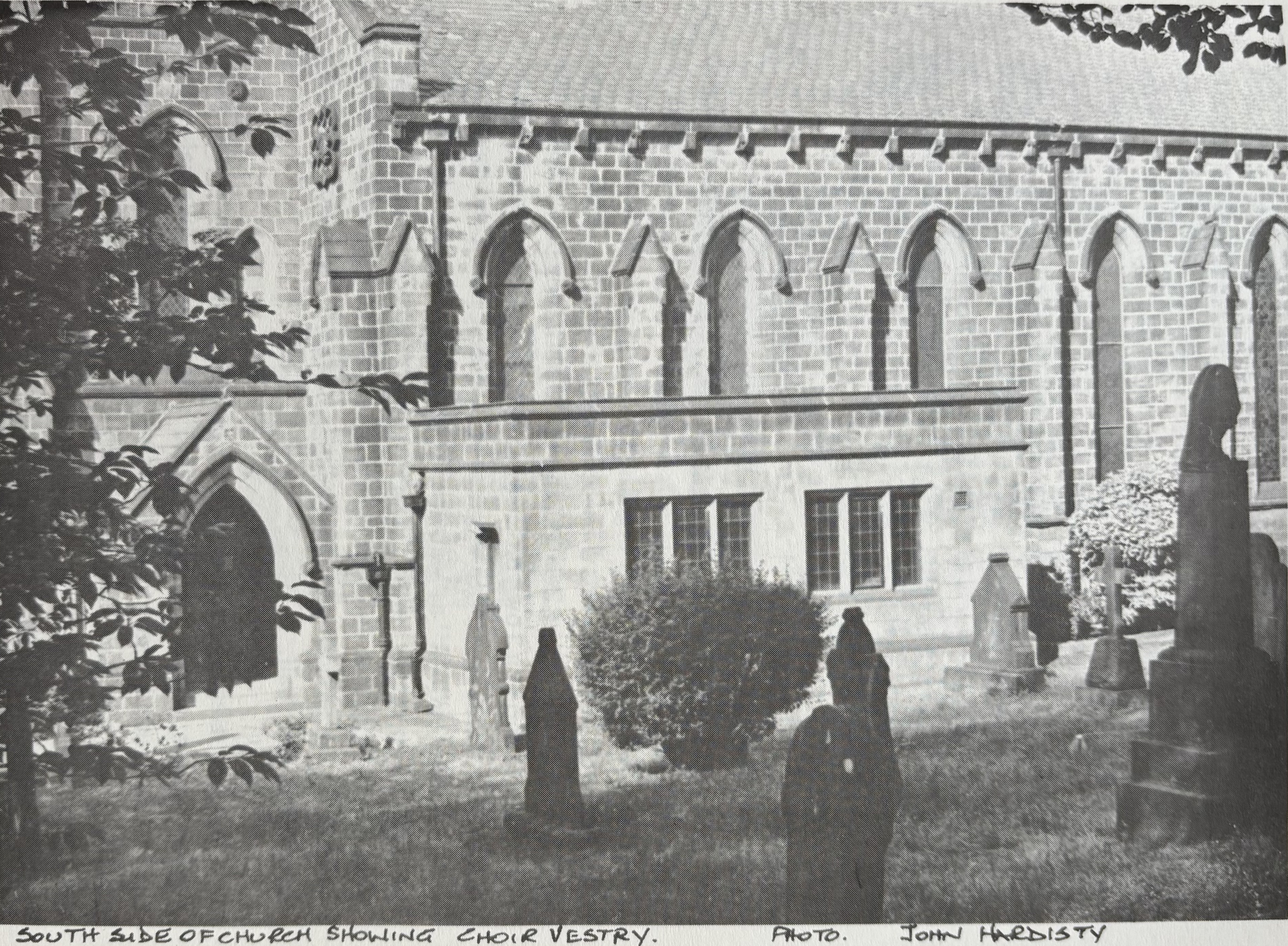
When the church celebrated its Centenary in 1943 the "Centenary Fund" was established with its main aim to provide for the vestry. "The object shall be to raise a sum of money to provide a Choir Vestry and to effect such other improvements as shall be deemed essential". This is a recorded minute passed at a Parochial Meeting held on 23rd April 1942. It was ten years later that Mr. Tom Rose laid the corner stone on a "nearly perfect Summer's evening". Mr. Rose was later presented with the silver trowel used for laying the stone, which had been donated by Mr. Cripwell of Cripwell and Shaw, the contractors. He had been in the choir for 60 years and had joined as a boy of eight years old. Canon C.C. Mackay who was vicar in 1943 returned from Barnoldswick to preach at the service held on the Thursday evening. It is recorded that during the service Mr. Ronnie Swaine gave his rendering of "If with all your hearts" from Mendelssohn's "Elijah".
The Centenary Fund when closed had reached a total of £2,438 which covered the cost of the vestry at £2,092. It was interesting to find the following in one of the Church Magazines - In reply to the Centenary Circular a former member of the congregation said "Your leaflet brings back to me the priceless hours in my memory of the time spent in the Church at Farsley, as a boy in the Sunday School and Choir, and later as a Sunday School Teacher, member of the Council and regular Communicant. Also on the Social side as Secretary of the Cricket Club and Treasurer of the Football Club... Since leaving Farsley I have travelled much abroad, but Farsley is still home to me..." Almost a year later on April 8th 1954 the Dedication of the Choir Vestry took place led by the Lord Bishop of Bradford, Dr. A.W. Blunt. Canon Mackay was also present. After the service a tea was provided by the Men's Institute.
1960's
Mention has been made in parts of this booklet of Sam Marsden, who must be the most notable person of our village. During 1964, a "Birthday Anniversary" was organised to celebrate two hundred years since his birth. On July 5th a procession of the Mayor with representatives of Australia, New Zealand and the Wool Trade proceeded to the Marsden Memorial in Town Street where two trees were planted peculiar to the two colonies. A service was then held in the Church and took on a "missionary outlook" as Marsden was known as the "Apostle of New Zealand". The lessons during the service were read by the High Commissioners for Australia and New Zealand. In honour of Marsden, the preacher at the service was a descendant - Rev. R.E. Marsden, Vicar of Pendeen in Cornwall.
It was interesting to find an item regarding the choir in the June 1964 magazine. A Mr. Duerden - organist of Blackburn Cathedral - came to St. John's and listened to the Choir's performance. He recorded that the boys and girls had nice voices with a good tone and he was also delighted with the tone of the ladies and with the quality of the men's singing. He said "You have a keen body of singers and they are stimulated by the Organist and Choirmaster and he deserves good support".
The Font
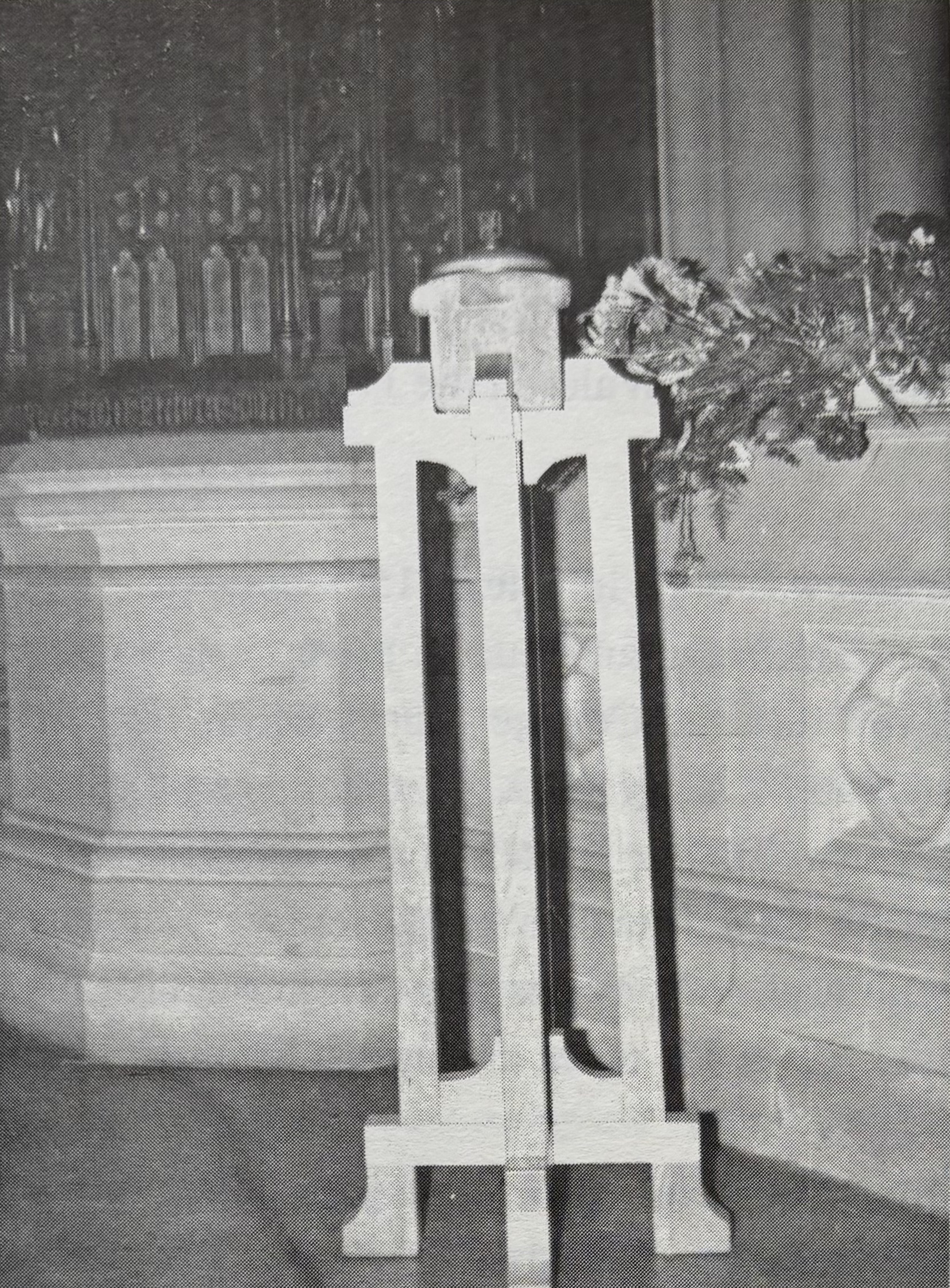
The baptismal font that is used at present is found near the pulpit but did not come into its present use until 1977. The font - a portable one - stood on the mantelpiece of the Vestry for many years and was originally used by the Rev. Elkanah Wales in the 17th Century and is carved E.W. 1667.
Elkanah Wales was born in Idle in 1588 and was one of seven sons. He later went to Cambridge and due to poverty he went as a Sizar - an undergraduate who received College assistance. Whilst at Cambridge he gained a B.A. and an M.A. by 1609. He then became curate to Calverley Church and then it is said in 1615 "at the invitation of the people of Pudsey, he became their Minister". Pudsey was, at the time, a very "scattered community". Mr. Wales was well known for his "Fast Days" and people would travel for miles around to listen to his preachings.
Unfortunately his non-conforming preaching and practices were brought to the notice of the Ecclesiastical Authorities and in 1638 he was cited at the Archdeacon's Visitation for not wearing the surplice on Sundays and Holy days. He had many offers from other districts "but remained steadfast to his flock at Pudsey" where he "laboured faithfully for upwards of 50 years".
It is said that "the night he died he examined and proved his evidence for heaven". Rev. Elkanah Wales died on the 10th July 1669.
The font is of a simple design in brown stone and the oak pedestal upon which it now stands was designed by Canon K. Cook of Bradford Cathedral and made by Harold Verity of Farsley. The cover was made by Harry Tilley, an engineer, with the small brass cross being provided by Patrick Costello. The completed pedestal was given by the sons of Mr. & Mrs. G. Moore.
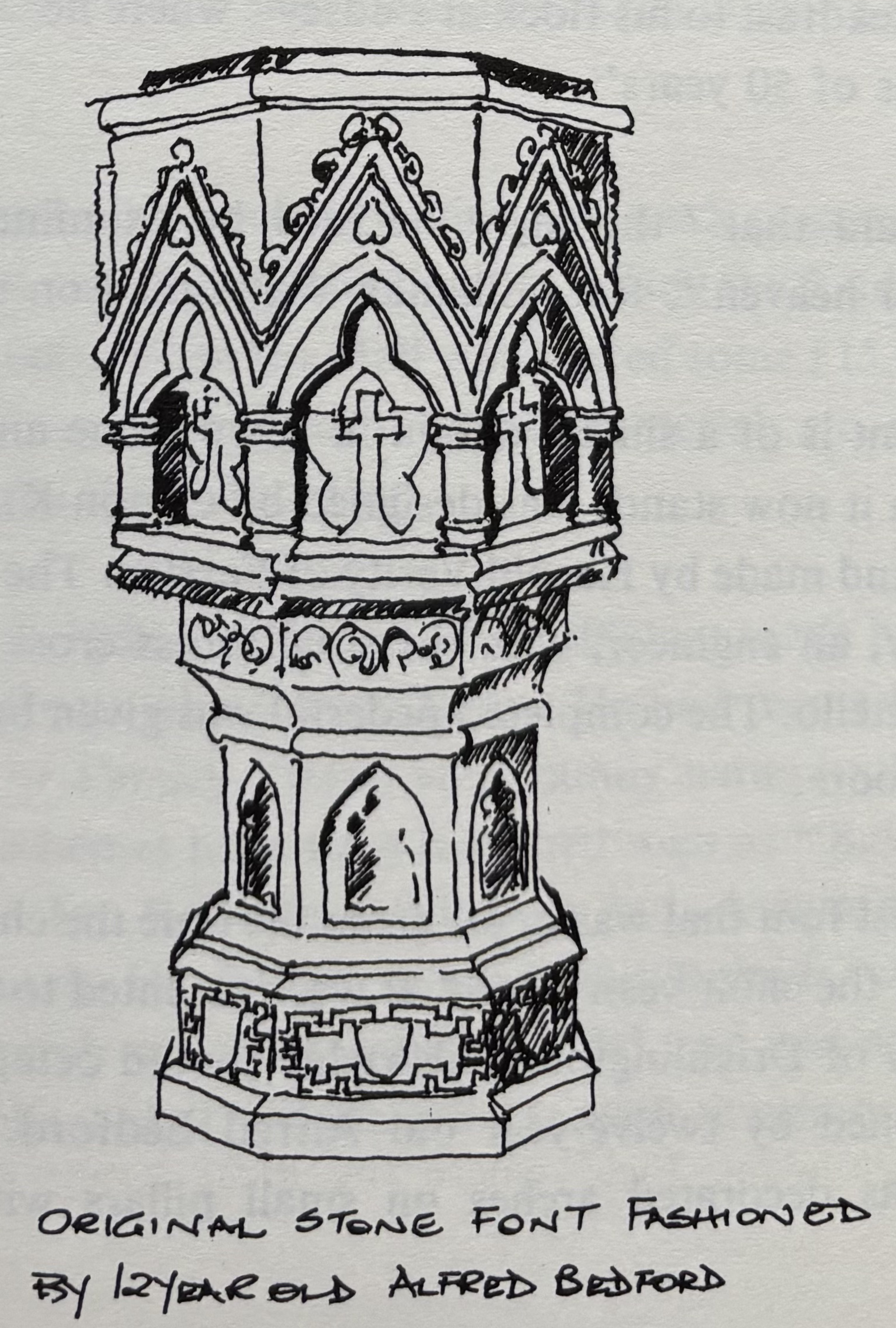
The first font that was in use from the time the church was built now stands near the choir vestry door. It was presented to the church by Rev. H.J. Bailey of Drighlington. This richly carved octagonal font in stone was fashioned by twelve-year old Alfred Bedford. Each side of the octagon has decorated arches on small pillars with blank arcading triforium forming the bowl of the font. This form of construction is sometimes used in the nave of the church at the height of the aisle roof below the windows. The column and base are also in octagonal form with the cover to the font being carved in oak decorated with wrought iron fittings.