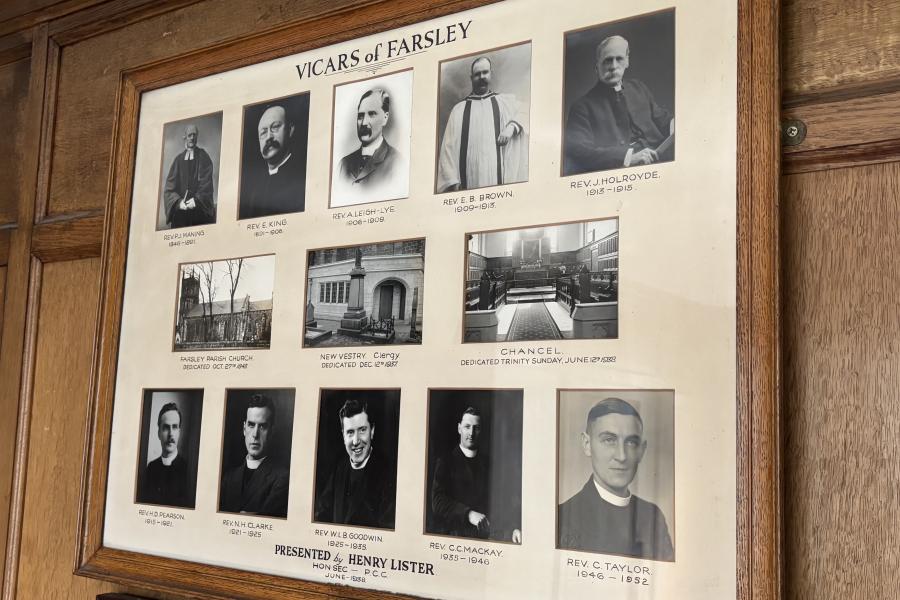
The following are items of interest connected with the village and the church obtained from various sources.
- 1754: Thomas Thornhill of Fixby, Huddersfield, purchased the land from Sir Walter Calverley.
- 1755: Enclosure of common lands for Calverley-cum-Farsley.
- 1770: Baptist Chapel built.
- 1777: Building of Rehoboth Chapel at Bagley.
- 1777: Eli Pearson brought a spinning jenny into Farsley. It was capable of spinning 20 threads at once.
- 1790: Improvements made in the process of scribbling (carding) wool.
- 1791: First horse-gin set going in Cobblegate by Ab. Grimshaw.
- 1807: "Top School" built. (Now Stockhills). Samuel Marsden brought wool from Australia - the first for commercial use.
- 1809: Marsden took to Australia five Spanish merino sheep given to him by George III.
- 1813: Cape Mill bought by Abimelech and Joseph Hainsworth.
- 1827: Methodist Chapel opened - school room added later.
- 1830: Start of Sunnybank Mills.
- 1832:
- Asiatic cholera claimed many lives in the area.
-
7th October - due to the upsetting of the Ilkley and Leeds coach, Hannah Allerton of Farsley was killed.
-
5th December - Trades union murder and disturbance. The present Pork Butcher's shop was a public house called the "Shoulder of Mutton" and it was here that "the plot" on James Benson and his sister was evolved. The Bensons lived at Bramley and worked in Hainsworth Square in the top storey of one of these buildings. The Clothier's Union at the time had declared a strike at Hainsworth's but the Benson's had continued to work and were declared "Black Sheep". On their way home they were attacked by some 30 strikers and stoned, near Throstle Nest. James died from his injuries and his sister escaped. Unfortunately no one was caught.
-
1835: Preaching-room opened at Rodley.
-
1836:
-
Further building at Sunnybank Mills.
-
Death of Abimelech Hainsworth.
-
Farsley Chapel enlarged and renamed Rehoboth.
-
-
1842:
-
19 April - "A union was consumated among the three"- this was the results of a meeting held between the teachers of Farsley, Beckbottom and Rodley Sunday Schools.
-
11 May - Recorded as happening in Farsley - "This evening a waggoner who was the worse for liquor was trotting his horses down the road, when one of the wheels ran against the causeway and shook him off the shafts. The wheels ran over him and broke his thigh".
-
28 July - John Gomersal fell from his gig in a state of intoxication and was much hurt. The accident happened near the end of Farsley Lane End.
-
-
1843:
-
8 March - "The poor are very numerous in Farsley, a number going every day to work at Wrose Mill, near Idle".
-
21 April - First baptisms in Church. Alfred Hollings and William Hardisty.
-
7 May - First burial took place - Mary Anne Short who was only 3 years old.
-
5 June - Whit Monday. The scholars of Farsley, Beckbottom and Rodley Schools met at the Chapel (Beckbottom), walked up Farsley, through Stanningley and parted at the Bar after they had sung "you'd better come to Jesus".
-
-
1844:
-
2 September - "Sam Farrar went to get married to Annie Busfield but ran away when the minister was putting the ring on her finger".
-
-
1845:
-
October - Potatoes cost 7d. per stone.
-
Flour cost 2/10d. per stone.
-
Methodist Chapel in Back Lane opened.
-
-
1846:
-
18 February - A public dinner was held at the Fleece Inn in the evening "when about eighty sat down". After dinner a meeting was held to commemorate the return of Lord Morpeth as M.P. for the West Riding of Yorkshire.
-
5 August - A Free Trade Dinner was held to celebrate the passing of the Corn Bill. The dinner was prepared by a Charles Fewster and held in a tent in John Busfields field. Some 360 took part and working people paid 9d. per ticket.
-
-
1847:
-
23 January - It was recorded that there was "little work for the poor". Potatoes had reached 1/2d per stone and flour cost 3/2d per stone. Malt could be bought for 5s. per stone.
-
15 February - A meeting was held in the Methodist School "to consider the state of the poor" in the village. When it was resolved to open a subscription fund £26.14s. was collected during the meeting. Reuben Gaunt again writes that "the poor of Farsley is in a very bad state. No work and dear food". Building of the National School (near Church) by subscription. Further building in 1851.
-
-
1848: Farsley Vicarage built due to the efforts of Parsons J. Maning. It was recorded that there were 2876 people living in 593 homes.
-
1851:
-
8 May - Meeting held at Bay Horse inn to accept tenders for the erection of the new school intended for Farsley. £230 was subscribed towards the project the same evening.
The following is a record of tenders accepted :--
R. Carter - Masons Work - £92.10s.0d.
-
J. Walker (Rawdon) - Joinery - £129.0s.0d.
-
J. Wheater (Calverley) - Plastering - £12.10s.0d.
-
W. Thornton Jr. (Calverley) - Slater - £3.12s.0d.
-
J.F. Hirst (Pudsey) - Pumbing - £20.16s.0d.
-
J.F. Hirst (Pudsey) - Glazing - £13.10s.0d.
-
G. Craven - Painting - £6.0s.0d
-
Total - £277.18s.0d.
-
-
December - Church bazaar raised £76.
-
Total cost of school was in the region of £500.
-
1851 Census: 561 Households with 2725 people. 707 children below the age of 10 years.
-
1850-60: Village was lit by gas lamps by the Pudsey Gas Company.
-
-
1855:
-
21 September - An Ox was roasted whole opposite the Fleece Inn to commemorate the taking of Sebastopol.
-
-
1860: A company was formed in the village to extend the gas plant of Joseph Whitaker. It was eventually bought up by Pudsey Gas Co. in 1865.
-
1865: Wesleyan Chapel built.
-
1866:
-
6 August - Water first piped into Farsley from Pudsey Waterworks. John Hollins, butcher, grocer and postmaster collapsed and died outside St. John's. He was carrying a letter bag from Farsley to Stanningley Station. He was 49 years old.
-
-
1868:
-
February - "Young woman drowned at Farsley".
On Sunday the village was thrown into a state of excitement by the announcement that a young woman named Hannah Wade, about 26 was missing and in consequence of the belief that she had destroyed herself, several mill dams were dragged. About noon her body was found in the dam adjoining Broom Mill, Beckbottom. -
14 April - Laying of foundation stone of Baptist Chapel. During the Summer there was a 3 month period in which there was no rain "such a drought as has not been seen for 50 years". Rootcrops perished but corn was "good and plenty". The River Wharfe was almost dry.
-
-
1869:
-
July - United Methodist Free Church opened school premises adjoining the Chapel.
-
-
1870:
-
22 July - Factory workers agitate for reduction in hours of labour in the area.
-
-
1871: This year was worse than the last as no rain fell for 6 months.
-
1874: Formation of School Board for Farsley and Calverley.
-
1876:
-
June - Death of James Turner, 91 years old, formerly connected with Providence Mills.
-
-
1880:
-
5 November - Violent storm of snow, wind and rain passed over this district on Wednesday and Thursday. Snow fell to a depth of several inches and thawed rapidly. The storm was accompanied by a gale causing much damage.
-
-
1883:
-
9 January - The Mechanical Institute was closed in Farsley.
-
-
1886:
-
2 July - Farsley Band of Hope demonstration.
-
-
1887:
-
9 July - Farsley National School extension.
A special service was held for the laying of the memorial stone which was laid by Ald. Rhodes J.P. Mayor of Pontefract. Mrs. Butler of West Royd provided tea after the service.
-
-
1888:
-
12 March - Burial scandal at Farsley!
-
30 October - Farsley beat Pudsey at chess by eight games to three.
-
-
1891:
-
January - Introduction of Farsley Church Monthly, 400 copies sold.
-
25 July - Farsley United Bands of Hope held their first annual demonstration.
-
654 people took part in the procession which left Back Lane School at 2.00p.m. headed by Bradford Borough Band. The procession proceeded through the village to Stanningley and onto Farsley Britannica Cricket field where a variety of amusements etc. were held. 300 boys and girls took part in a Grand Juvenile Concert. During the year a Curate's Fund was set up with immediate donations of £51 followed by a Sale of Work which raised a further £34.
-
Due to the New Education Act the National Schools reduced their fees from 4d. to 1½d. in the Mixed School and abolished entirely the fees in the Infant's Section. With this remission of school fees the deposits in the Penny Savings Bank were increased.
-
At the Carol Service at Christmas the Choir Fund was started from Collections. It was used mainly for annual trips for the Choir.
-
Census of housing showed 1244 occupied by 5328 people.
-
-
1892:
-
July - It was decided that Evensong was to be moved to 6.30p.m. to come "in line with modern custom". The gallery was closed at evensong during the month.
-
It was also agreed that if any seats were vacant in the body of the church after the bell ceases they may be occupied free of charge. At this time practically all seats were let on a quarterly basis and the condition of letting was that "if not occupied when the bell ceases, seats become free for that service". Two rows at the front of the Nave were free to those who could not afford a pew rent and these became quickly filled often leaving people waiting outside until the bells stopped. Pew rents were 1s.3d per quarter. At Shrove-Tide, a tea and entertainment was held at Doctor's Hill Mission.
-
-
1893
-
February - During the month J.W. Reeder was appointed as lay reader. A Young Men's Guild was formed with specific aims in mind. Firstly, to promote general culture. Secondly, to establish Saturday afternoon rambles during the Summer months and thirdly, but by no means least, to encourage Bible reading and Church History Study.
-
Whit-Tuesday - the Sunday School Teachers had a trip down into Derbyshire. The train left Calverley Bridge at 6.00a.m. for Matlock. Some went to Rowsley, visiting Haddon Hall and Bakewell Church.
-
8 July - The Temperance Society organised a boat trip from Rodley to Idle Farm, Apperley Bridge. Tickets were 6d. for the boat fare and picnic tea. It was well supported by 160 people.
-
27 October - Special service to celebrate the first 50 years of the church. A special Jubilee Hymn was written by W. Richardson (See end of book).
-
Farsley became an Urban District Council.
-
The Church Institute organised a reading club for Young men of the church. The club was open all day until 10.00p.m. and made daily papers available as well as books.
-
Christmas - Gifts of beef and groceries were made to those homes feeling the "pinch of poverty". Messrs. Butler provided coal for some households. The Choir boys received their first Xmas box.
-
- 1894
- 27 January - The Men's Guild organised a tea and carried out all work without the aid of the ladies. It was recorded of the evening "where we saw young men struggling to cut sandwiches as quickly as they were eaten". At the event the Vicar presented books, received from a London charity, to be added to the Guild Library.
-
21 April - The newly formed St. John's Cricket Club played their first match against Birkenshaw Choir. Birkenshaw scored 39 runs and St. John's managed only 27.
-
17 May - The Rambling Club was formed and had their first outing on May 26th when they went to Shipley Glen and Saltaire by way of Calverley and Thackley. During the year it was decided to give a small quarterly payment to the Choir boys being paid according to their merits of singing, attendance and conduct. Mr. Herbert Slater guaranteed the sum needed.
-
It was noted earlier in the year that the Church accounts showed a deficit of £18 which was due to the re-gravelling of the Churchyard walk, securing the roof, repairs and pointing to the South-West corner of the church and the bill for the architect's inspection in 1877.
- 1895:
- Beckbottom Mission begun.
- Church School closed and scholars transferred to Farsley Back Lane Board School. Due to the Board School becoming overcrowded the premises of the Church School were rented to accomodate the Farsley Central Infants School.
-
1896: A concert held to raise money for the Benevolent Society was "trouble and expense out of all proportion to the patronage".
-
1897: A Diamond Jubilee service for the Queen was held.
- 1898: Farsley Benevolent Society gave 10 guineas annually to be spent on "recommends" in aid of Rawdon Convalescent Home. Half was a donation with the remainder being raised locally. A special united service with music by the united choirs of the village was held to raise money but some controversy took place. Mr. John Hardisty who was Hon. Sec. at the time, had to suffer some indignity from certain quarters and due to these "unfounded and charitable rumours" reflecting upon him ceased the service to be financially unsuccessful. Although the allegations were withdrawn and were "admitted to founded on ignorance", Mr. Hardisty did not receive an apology. His expenses over 3 years amounted to only 2s.3d. It was felt that if more would contribute with their help more good would be done. It would be the sick and needy who would suffer if the society was to lapse.
- 1900:
- The Parish boundary was fixed, "Persons living in the District thus enclosed cannot legally be married at Calverley nor have their banns published there."
- February Snow blizzard recorded.
- 15 December Death of Elijah Slater (77 years).
- 1901: 5579 people occupied 1377 dwellings.
- 1907: Death of Reuben Gaunt.
- 1910:
- Rev. Brown started during the year - Band of Hope - 120 members.
- Scripture Union - 104 members, Communicant's Guild - 80 members. Sunday School Teacher's Preparation Class.
- The Band of Hope - the object of this society was not only to promote habits of Temperance, but to "advance the health and happiness of its members and to bring the religion of Christ to bear upon social and every day life".
- 17 November Flood at Beckbottom due to excessive rain.
- 1911:
- Introduction of a choirmaster - Mr. H. Swaine, Organist at the time was Mr. A. Brackenbury.
- 22 June A special service was held in church to commemorate the Coronation of King George V and Queen Mary.
- 5993 people occupied 1530 dwellings.
- 1912:
- Death of Benjamin Overend Pearson.
- Free Will Offering Fund began.
- Wesleyan Chapel school opened.
- It was agreed that the organist would receive £20 and the choir master £16.5s. per year.
- 1913:
- Burials ceased in churchyard.
- 26 January Farsley Hospital Sunday.
- 1915:
- September The church organ was for the first time powered by electricity. It had previously been blown by hand.
- 1917:
- In July an evening was organised in aid of Mission Church building. The Vicar, Rev. Pearson, complimented all those who took part, "I think the industry and skill shown by so many at so early an age is most praise worthy". The event took place in the Vicarage garden. It seems that the Verger had a "tall hat" used for "pot shoes" which it was said "eluded the aim of the finest shots in Farsley".
- The pillow fight was popular and apparently "The bell ringer and another official struggled for apples that went to the bottom of a tank water".
- 1920:
- The first Parochial Church Council meeting was held. This was due to the Church Enabling Act.
- 22-24 April A Bazaar was held with the object being to raise £1,000 with the total result reaching £1,179. The Sunday School contributed nearly £42 at their opening ceremony on the final day.
- 1921: The village population had increased to 6117 living in 1586 dwellings.
- 1922:
- 1 July Saturday. A special service was held for the unveiling and dedication of the memorial window to those men of Farsley who gave their lives in the Great War. The service was conducted by the Ven. Archdeacon W. Stanton-Jones of Bradford.
- 1923:
- 29 March School closed - 80 children transferred from Church School to Wesley Street and Frances Street Schools. 36 went to Wesley and 44 to Frances Street.
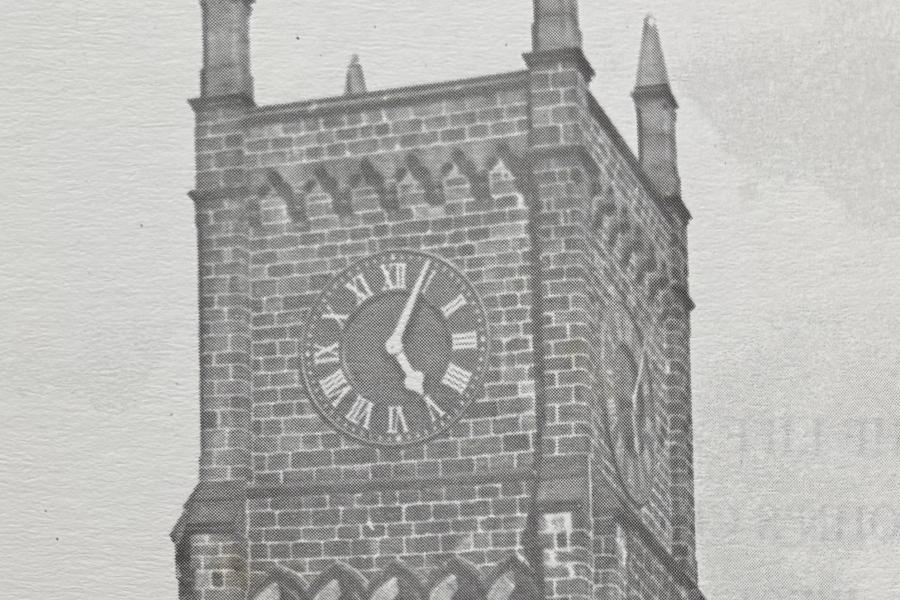
- It was necessary to renew the clock faces. Cost £289.3s all raised by donation. Mr. W. Hind had been a member of the choir for 34 years.
- 13 June Saw the opening of the Church Institute, the ceremony being performed by Jesse Stephenson who contributed £500 towards the cost. The billiards table and chairs were provided by Caleb Wade and Gerald R. Gaunt.
- 1927: The Busy Bees was started. It was a group of teenage girls who met in the Sunday School and did embroidery in aid of the church funds. Miss Rachel Webster was their teacher and leader.
- 1928: "West Royd" house, gardens and land was purchased for £3,000. A section was reserved for games and the gardens laid out.
- 1931: Population increase in ten years of only 41 people to 6158 occupying 1865 dwellings.
- 1933:
- 26 February Due to an exceptional fall of snow on the Saturday very few people attended church - fifteen in all. The organist, Mr. Walsh, was unable to be present and the eleven year old son of the Rev. Goodwin played the organ for the service. It was said the "David played well". Even the vicarage was snow bound. The snow also had its effect on the church clock which stopped at 12.30 p.m. on the Saturday - a rare occasion in the clock's life.
- 1934:
- 28 July Unveiling of a memorial to Samuel Marsden in Town Street. The stone used for the walls as well as the memorial were part of a cottage and warehouse that stood on the site.
- The Church organ was renovated at a cost of £575.
- 1935:
- October "An electric Gram recorder of a peal of bells" was installed in the tower to replace the single bell. It was given by Mr. & Mrs. J. Stephenson.
- 1937:
- Coronation Year. An "Old Folks' Tea and Concert" was held for all the residents of Farsley over 60 years of age.
- Farsley ceased as a council in its own right on 31st March and became part of Pudsey Borough.
- 1938: Xmas parcels were distributed to local families.
- 1939: 65 parcels of groceries and 6½ tons of coal were distributed at a cost of £54.14s.
- 1941: The Young Men's Class paid for and distributed 22 tons of coal to local families. In some notes made by Mr. H. Lister he recalls the "War Black Out Restrictions". The windows in the church were boarded up. Under the "Fire watching order" twenty-one voluntary Fire watchers took up their duties - 3 per night - to look after the Church and its buildings.
- 1942: Mother's Union formed. It was realised that Farsley was the only Parish in the Calverley Deanery without a branch. Sixteen supporters were present.
- 1944: Death of Jesse Stephenson J.P. (17th Jan.) he had been Vicar's Warden from 1910-44. A special service was held on 21st January.
- 1945: Death of Lance Scholey - schoolmaster of whom it was said "He was a very gentle, perfect knight".
- 1946:
- 22 November Death of Charlotte Hilda Lister (66)
- "Miss Lister came from an old and respected Farsley family. Her father was baptised in the church in 1850. The furniture of our Church has been greatly enriched by generous gifts in which she shared.
- 1947:
- 18 May 26th Anniversary of Church Institute held.
- 10 June Calverley Deanery Festival Village held the Festival for the first time and it was said that some 300 members of the Mothers Union were present.
- 1948:
- 10 October A special service was held for the unveiling of the Farsley War Memorial for both World Wars. It is situated in front of the old council offices.
- 1950:
- 1 June Death of Caleb Wade. He had spent 30 years in the choir and had been Church treasurer for 25 years.
- The Xmas Fayre raised a total of £1,578 over three days and the expenses were a mere £28. A "tremendous effort and profit". To thank all helpers a Service of Thanksgiving was held on Sunday, 3rd December. The Bishop of Selby preached at the morning service.
- 1950:
- September "Girls Friendly Society v The Choir Boys
A Famous Victory
'Twas on a September evening,
The cricket match was done,
And G.F.S. and Choir-boys
Were basking in the sun.
At least, a few were sitting thus,
The rest were running for the bus !
But what's it all about, you say ?
What cricket match was this ?
Why, haven't you heard ? The Choir-boys
Were playing the G.F.S.
And if, you ask the boys, they'll say
"Why, 'twas a famous victory !"
They'll tell you they went into bat,
And stayed all afternoon,
Although the girls said they would buy
Them ices if out soon.
But at last the final wicket fell,
And the girls gave a triumphant yell.
And then the girls went into bat,
But hush ! we draw a veil
Over that innings, for 'twas such
To make the bravest quail !
First one was caught, then one was bowled,
And soon a sorry tale was told.
The score you ask ? Well, do you mind ?
We'd rather keep in dark.
The figures all in black and white
Would look too cold and dark
Enough that girls and boys agree
It was a famous victory !
Anonymous"
- 1951:
- 23 January A letter was received from the Ministry of Works in reply to a request for permission to build a Choir Vestry. Government restrictions on the issuing of building licences meant that permission was not granted.
- Church Review reached 4,800 circulation in the year.
- A bequest by the late Caleb Wade amounted to £50 to be used for the needs of the Choir. Mr. Wade had been the Choir Treasurer for 25 years. The late Fred Braham left £50 for the general use of the Church. He had been People's warden for many years.
- 1952:
- The Girl's Friendly Society celebrated their first 25 years. It had been started by Rev. Goodwin's wife.
- The Church clock had to be repaired because of the worn mechanism. The cost being met by donations. Farsley Celtic held a benefit match on May 6th at Throstle Nest ground to assist the fund.
- October A further attempt made to obtain a building licence for the Choir Vestry.
- The "Young Wives" was formed by Mrs. Clark and Mrs. Hudson with some twenty wives turning up for the first meeting.
- 1953:
- During October it was necessary to fell seven trees in the Church Yard which were disturbing the boundary wall.
- It was agreed that four ladies in the choir should be robed in cassocks, surplices and mortar-boards. The cost was met from the bequest of the late Caleb Wade. Cost £38.10s.
- 31 May A Sunday School and Youth Rally was held to commemorate the Coronation of Elizabeth II.
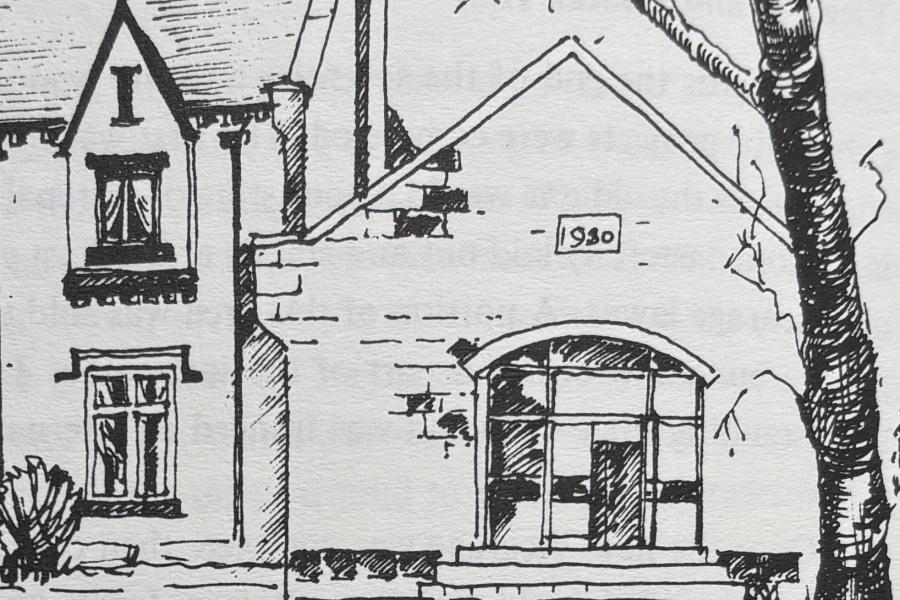
- Deeds of the school were acquired and these showed that there were two with the school and cottages being built at different periods. The original school is the building with Farsley National School marked on the wall and the two cottages erected in 1847. The large hall and present entrance was added in 1887.
- 1957:
- Rev. David Sheppard preached at St. John's (Cricketer).
- Mr. Tom Rose was presented with a silver salver for his long service in the choir.
- 1958: Death of Mr. H. Lister who had been secretary to the Church Council for 50 years.
- 1959:
- Noted in the January Review that 90 baptisms took place in 1958.
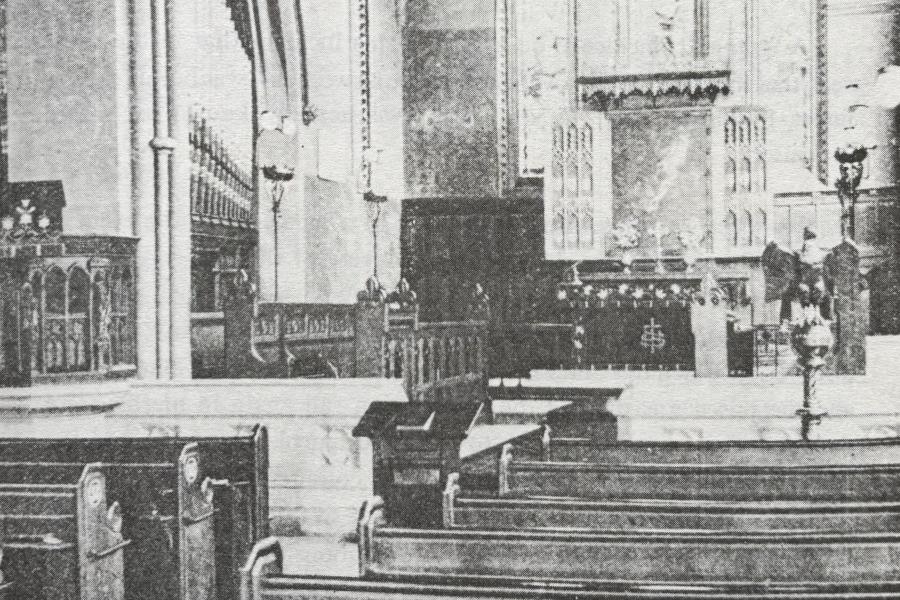
- February Choir attendance was recorded as being very high. There were 3 married couples in the choir. During re-decoration of the Church the shield on the gallery front was removed and revealed a clock face. Was it there for the Choir to time the Vicar's sermon as the congregation were in no position to see it?
- November Late Henry Lister's bequest to the Church was £2,000. £1,000 to be invested and the rest used equally between maintenance of Chancel and Church expenses. His sister Hilda left £1,000 to be invested with the income to be spent on Fabric Fund and Vicar's Stipend.
- Jesse Hollingworth Memorial prize established for the Sunday School Scholar in the Middle Department for good conduct and attendance.
- 1961: An orphan, Charles Bailey, received a gold medal as an award for rescuing a friend from the canal at Calverley. He was a member of the Church Lad's Brigade.
- 1963: It was agreed that the Church Yard gates must be closed for one full day per year in order that Pudsey Corporation would accept maintenance of the Church Yard. Now the responsibility of Leeds Metro.
- 1964:
- 5 July 200th Birthday anniversary of Sam. Marsden.
- 1968:
- Death of Tom Rose a long serving member of the church in many ways. He was the Sunday School Treasurer; a member of the Parochial Church Council; and a member of the choir for some 80 years.
- 1982:
- April Farsley earned its own special place in the Guinness Book of Records following an "epic trans-globe dash" to bring 12 wool fleeces into the town to be sold at a special charity auction. The fleeces were a gift of the city of Whangarei in New Zealand and were auctioned off at the Samuel Marsden Memorial Garden. After a plane flight from New Zealand to Heathrow Airport they were driven to Farsley by rally driver Richard Jackson. The proceeds of the auction went to the International Year of the Disabled Charity. Mr. Hainsworth of Hainsworth & Sons of Stanningley bought one of the fleeces which were given to mark "Wool Week '82" in Whangarei. The actual time taken from the shearing of the sheep to the Memorial Garden was 41 hours 3 mins. The details were sent to the Guinness Book of Records for their consideration.